

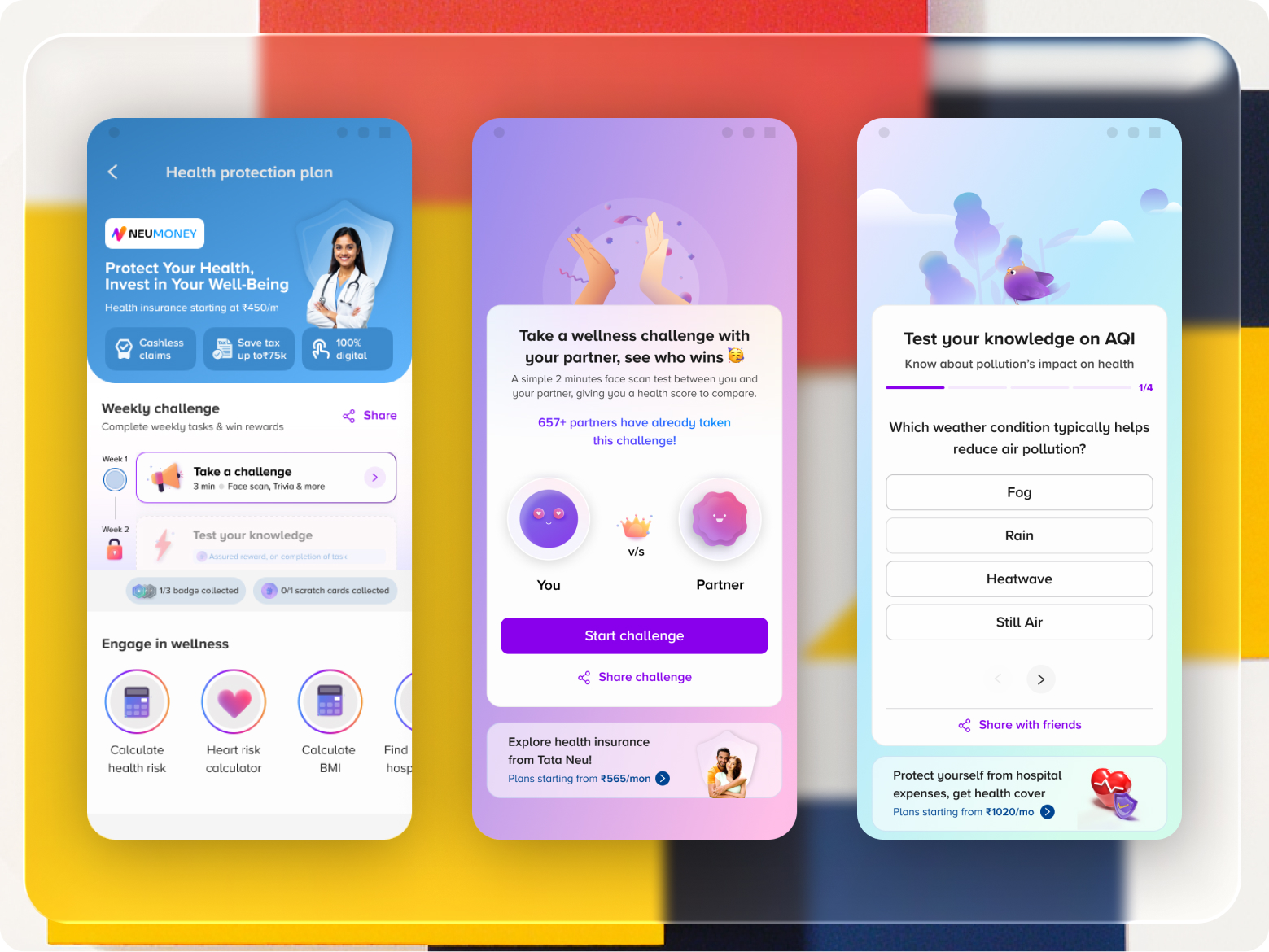
ARVIND SETHIA - FEATURED PROJECT
Applying TIM to Health Insurance
Reimagining Health Insurance Journeys Using Behavioural Triggers
Applying the TIM framework to redesign Health Insurance journeys across discovery, evaluation, and conversion.
UX execution
journey redesign
OBJECTIVE / INTENT

Health Insurance has high intent—but also the highest friction.
Users research extensively, hesitate to share details, and drop before completion.
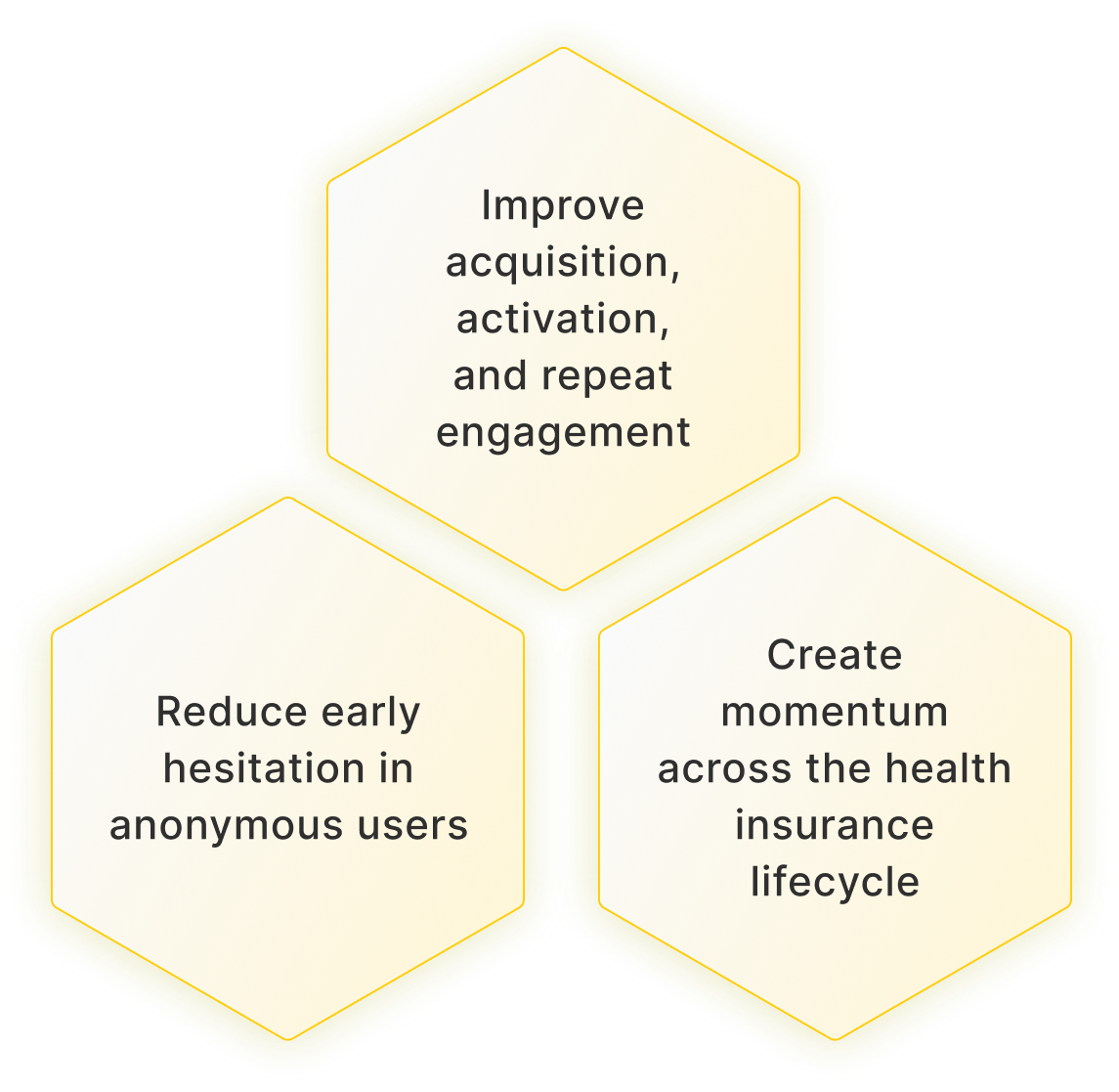
The objective was to apply the TIM framework to:
DESIGN OPPORTUNITY
Health Insurance decisions don’t fail because users aren’t interested.They fail because journeys expect commitment before confidence.
The opportunity was to:
Create low-barrier entry points
Let users explore before committing
Replace static pages with interactive, progressive experiences

Lorem ipsum title of my project, and a long long long name
Details on how TIM strategy evolved
DESIGN STRATEGY
USER UNDERSTANDING & INSIGHTS
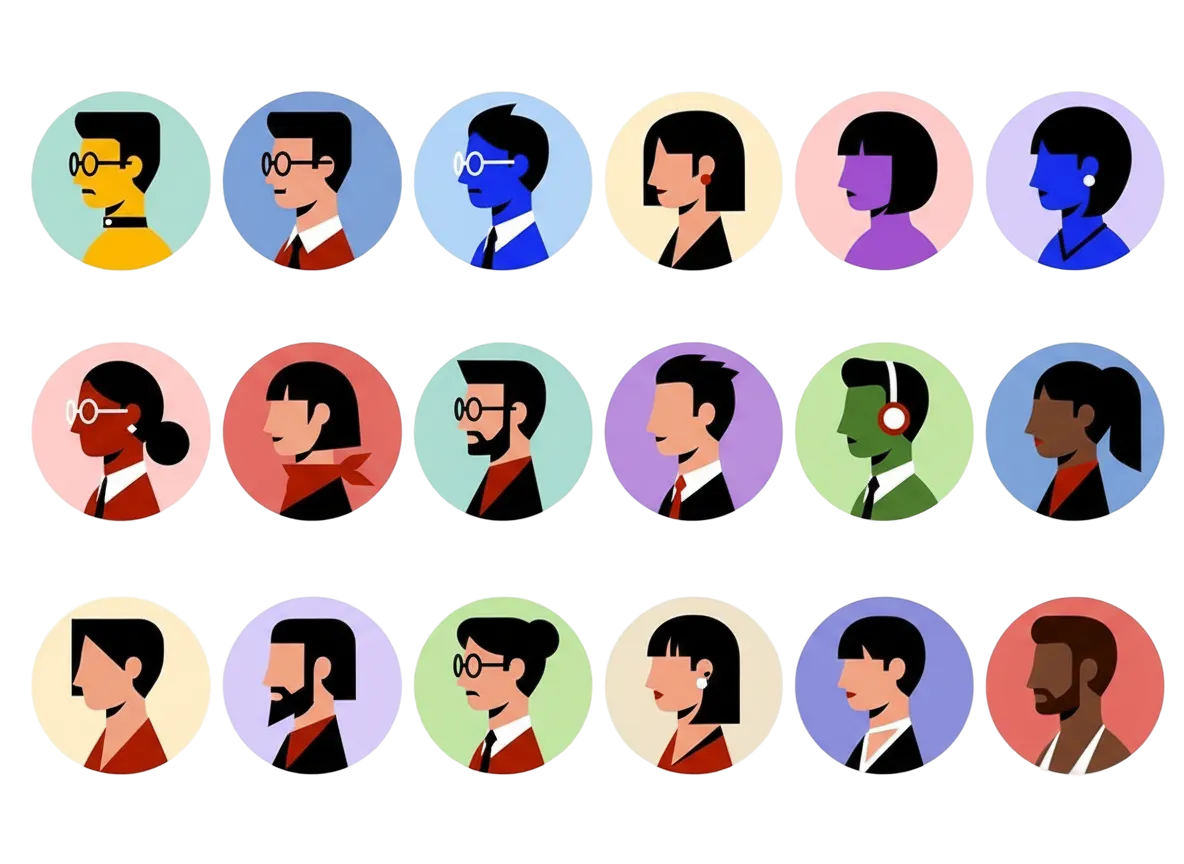
Target low intent user
User type observed
Anxious planners checking premiums repeatedly
First-time buyers overwhelmed by jargon
Users researching but avoiding detail-sharing

Core User Insights (Cross-Product)
1
Trust builds slowly
Users need reassurance before they commit personal data.
2
Shorter buying cycles matter
Long research journeys cause fatigue and drop-off.
3
Scenarios outperform explanations
Users respond better to “what-if” simulations than content.
4
Effort directly impacts engagement
Any additional step increases abandonment risk.
5
Value must feel immediate
Health insurance feels wasteful unless value is visible upfront.
GETTING DIRTY - APPLYING TIM IN PRACTISE
We ran a hands-on ideation workshop to translate TIM from framework to execution.
Instead of ideating features, we asked:
What triggers relevance here?
Where can users interact instead of reading?
How do we carry momentum forward?
Idea themes that emerged out of the workshop
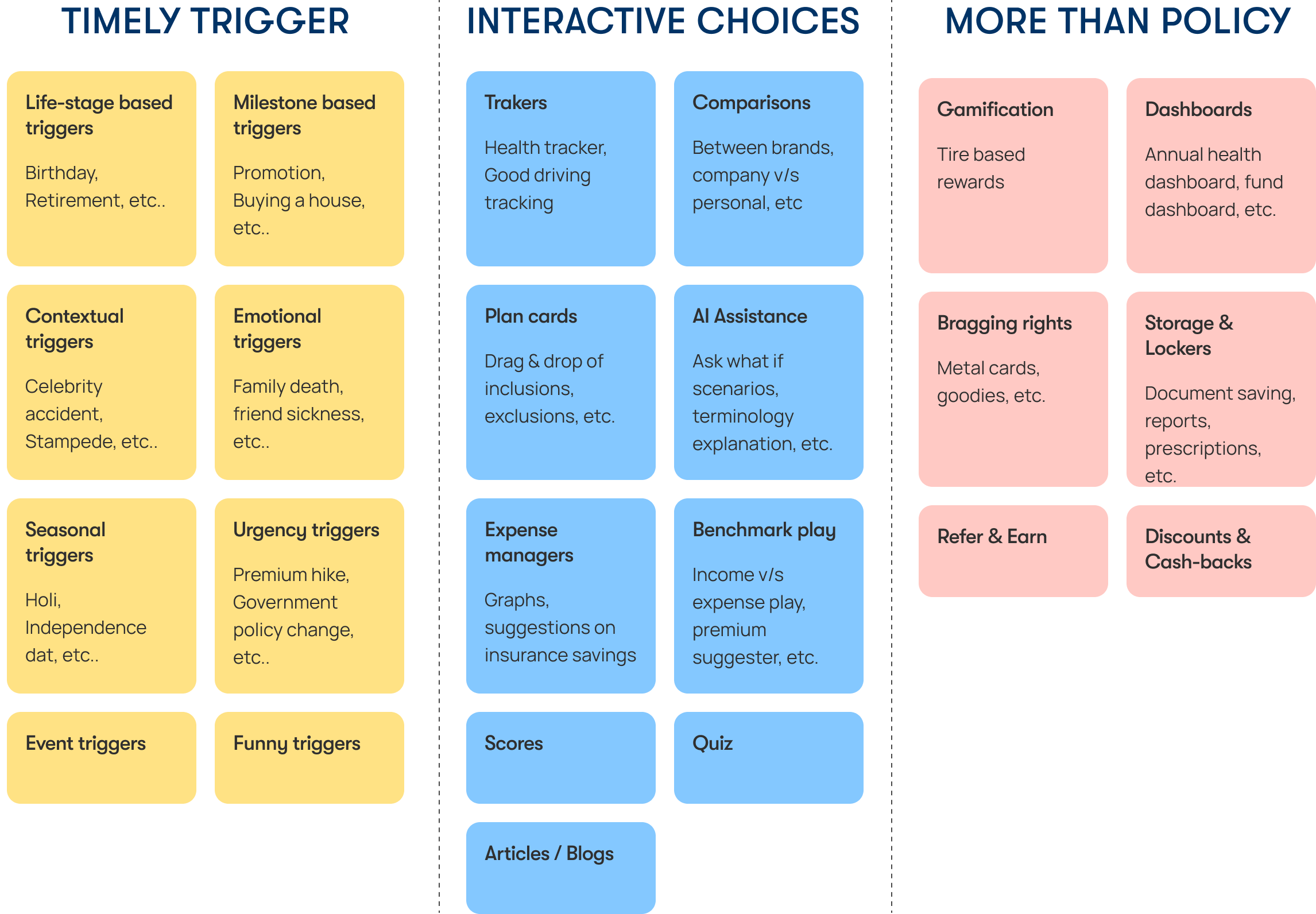
SYNTHESISING IDEAS INTO JOURNEY
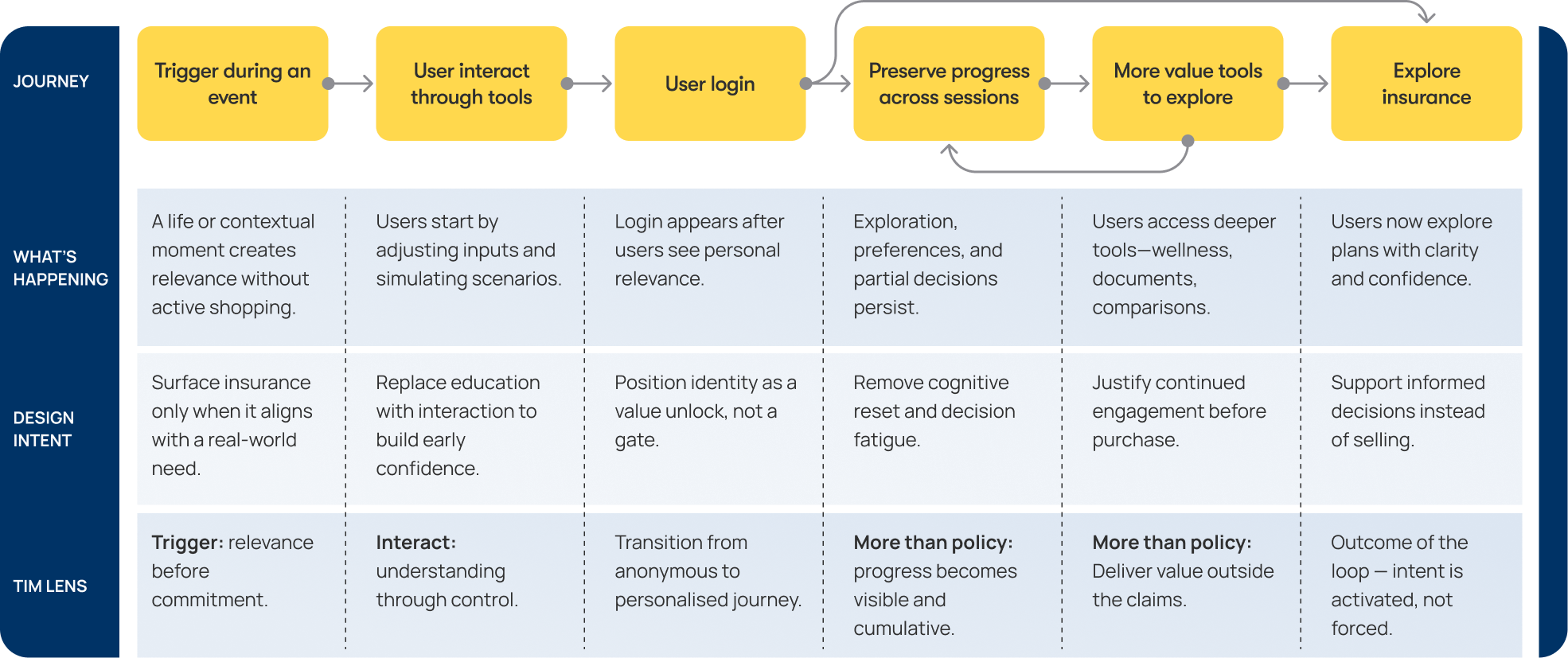
We mapped the full Health Insurance journey using TIM as the organising lens:
Trigger relevance early
Enable exploration through tools
Preserve progress across sessions
EXECUTING THE JOURNEY
Peripheral (reinforces trust + preference)
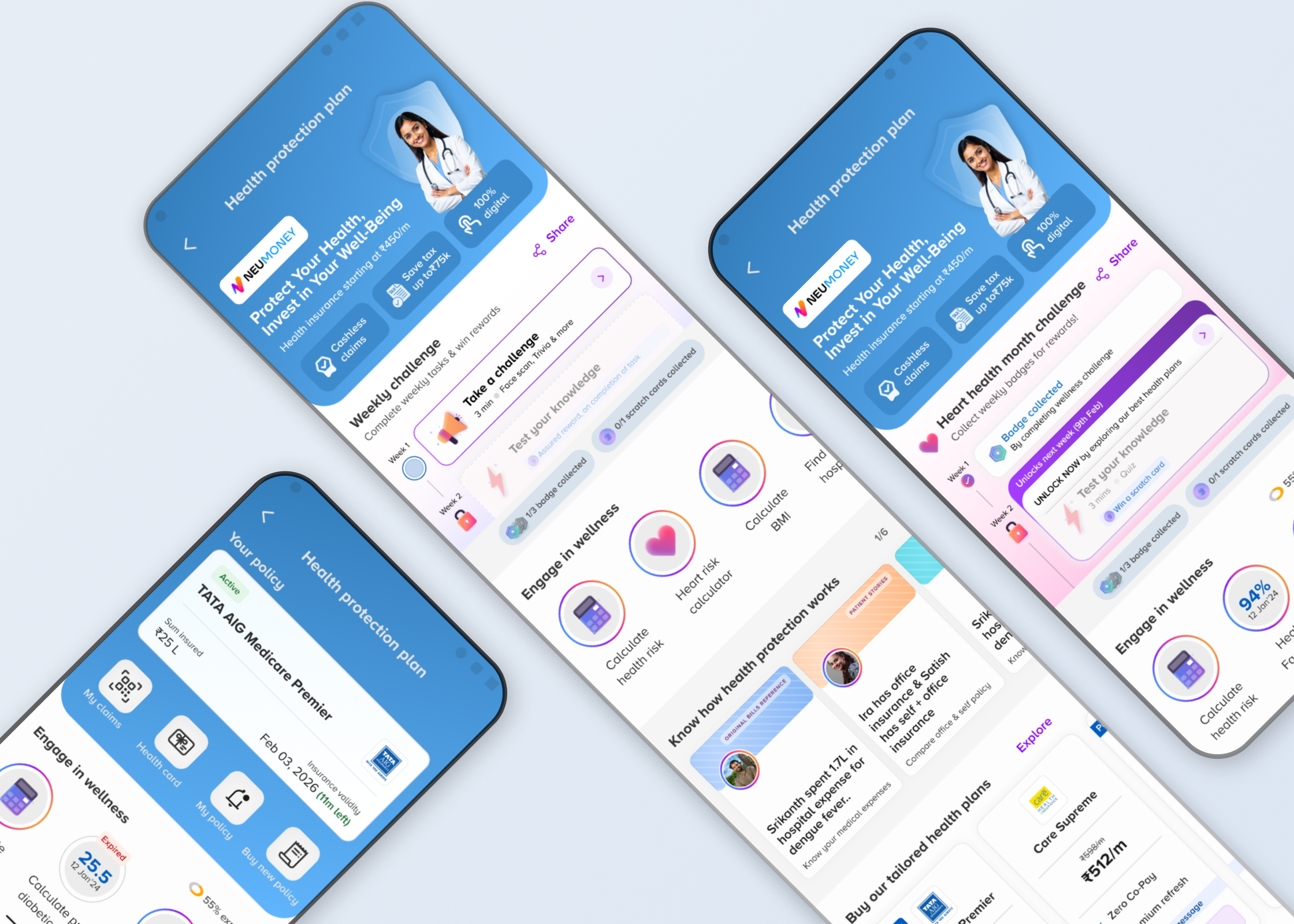
The redesigned flow focused on one interactive hook per screen:
Entry via a contextual trigger
Immediate tool-based interaction
Clear next-step momentum
Young couple ‘Face scan’ campaign
Play the video, to experience the flow
Core (must-have for adoption)
Play the video, to experience the flow
AQI trigger
Birth month trigger
AQI trigger
Low-friction landing pages: Instead of educating users, we let them play
IMPACT
Early signals indicated:

Higher engagement with interactive tools
Improved depth of exploration before drop-off
Reduced reliance on discounts for conversion
Clearer progression for returning users
The most important shift wasn’t metrics—it was behavioural:
Users stayed longer because the journey worked with their mindset.
MY ROLE & SCOPE
ROLE: Principal designer - Behaviour led strategy
DURATION: 3 months · Cross-functional squad
SCOPE: Created TIM framework · Research synthesis · Strategy → execution mapping · Experience direction
COLLOBORATION: Product, Research, Growth, Engineering
Closing Note
This project validated that TIM is not a theoretical framework.
When applied correctly, it changes how users enter, explore, and continue through insurance journeys.
MORE PROJECTS TO EXPLORE
Similar work and additional learning in other projects

ARVIND SETHIA - FEATURED PROJECT
Applying TIM to Health Insurance
Reimagining Health Insurance Journeys Using Behavioural Triggers
Applying the TIM framework to redesign Health Insurance journeys across discovery, evaluation, and conversion.
UX execution
journey redesign
OBJECTIVE / INTENT
Health Insurance has high intent—but also the highest friction.
Users research extensively, hesitate to share details, and drop before completion.
The objective was to apply the TIM framework to:
DESIGN OPPORTUNITY
Health Insurance decisions don’t fail because users aren’t interested.They fail because journeys expect commitment before confidence.
The opportunity was to:
Create low-barrier entry points
Let users explore before committing
Replace static pages with interactive, progressive experiences
Lorem ipsum title of my project, and a long long long name
Gorem ipsum dolor sit amet, consectetur adipiscing elit. Etiam eu turpis molestie.
Badge type 1


USER UNDERSTANDING & INSIGHTS
Target low intent user
User type observed
Anxious planners checking premiums repeatedly
First-time buyers overwhelmed by jargon
Users researching but avoiding detail-sharing
Behavioural drivers that consistently shaped user decisions:
1
Trust builds slowly
Users need reassurance before they commit personal data.
2
Shorter buying cycles matter
Long research journeys cause fatigue and drop-off.
3
Scenarios outperform explanations
Users respond better to “what-if” simulations than content.
4
Effort directly impacts engagement
Any additional step increases abandonment risk.
5
Value must feel immediate
Health insurance feels wasteful unless value is visible upfront.
GETTING DIRTY - APPLYING TIM IN PRACTISE
We ran a hands-on ideation workshop to translate TIM from framework to execution.
Instead of ideating features, we asked:
What triggers relevance here?
Where can users interact instead of reading?
How do we carry momentum forward?
Idea themes that emerged out of the workshop
SYNTHESISING IDEAS INTO JOURNEY
We mapped the full Health Insurance journey using TIM as the organising lens:
Trigger relevance early
Enable exploration through tools
Preserve progress across sessions
EXECUTING THE JOURNEY
Campaign → Landing → Exploration
The redesigned flow focused on one interactive hook per screen:
Entry via a contextual trigger
Immediate tool-based interaction
Clear next-step momentum
Young couple ‘Face scan’ campaign
Play the video, to experience the flow
More Campaigns
Play the video, to experience the flow
AQI trigger
Birth month trigger
AQI trigger
Low-friction landing pages: Instead of educating users, we let them play
IMPACT
Early signals indicated:
Higher engagement with interactive tools
Improved depth of exploration before drop-off
Reduced reliance on discounts for conversion
Clearer progression for returning users
The most important shift wasn’t metrics—it was behavioural:
Users stayed longer because the journey worked with their mindset.
MY ROLE & SCOPE
ROLE: Design lead - UX & UI execution
DURATION: 1 month
SCOPE: TIM Framework → Ideation → Prioritisation → Prototyping → Testing
COLLABORATION: Product, Research, Growth, Engineering
Closing Note
This project validated that TIM is not a theoretical framework.
When applied correctly, it changes how users enter, explore, and continue through insurance journeys.
MORE PROJECTS TO EXPLORE
Similar work and additional learning in other projects
ARVIND SETHIA - FEATURED PROJECT
Applying TIM to Health Insurance
Reimagining Health Insurance Journeys Using Behavioural Triggers
Applying the TIM framework to redesign Health Insurance journeys across discovery, evaluation, and conversion.
UX execution
BEHAVIOUR UX
OBJECTIVE / INTENT
Health Insurance has high intent—but also the highest friction.
Users research extensively, hesitate to share details, and drop before completion.
The objective was to apply the TIM framework to:
The card captures how TIM strategy has evolved as strategic pillar fot Insurance design
DESIGN STRATEGY
DESIGN OPPORTUNITY
Health Insurance decisions don’t fail because users aren’t interested.They fail because journeys expect commitment before confidence.
The opportunity was to:
Create low-barrier entry points
Let users explore before committing
Replace static pages with interactive, progressive experiences
USER UNDERSTANDING & INSIGHTS
Target low intent user
User type observed
Anxious planners checking premiums repeatedly
First-time buyers overwhelmed by jargon
Users researching but avoiding detail-sharing
Health-Specific Behavioural Insights
1
Trust builds slowly
Users need reassurance before they commit personal data.
2
Shorter buying cycles matter
Long research journeys cause fatigue and drop-off.
3
Scenarios outperform explanations
Users respond better to “what-if” simulations than content.
4
Effort directly impacts engagement
Any additional step increases abandonment risk.
5
Value must feel immediate
Health insurance feels wasteful unless value is visible upfront.
GETTING DIRTY - APPLYING TIM IN PRACTISE
We ran a hands-on ideation workshop to translate TIM from framework to execution.
Instead of ideating features, we asked:
What triggers relevance here?
Where can users interact instead of reading?
How do we carry momentum forward?
Idea themes that emerged out of the workshop
SYNTHESISING IDEAS INTO JOURNEY
We mapped the full Health Insurance journey using TIM as the organising lens:
Trigger relevance early
Enable exploration through tools
Preserve progress across sessions
EXECUTING THE JOURNEY
Campaign → Landing → Exploration
The redesigned flow focused on one interactive hook per screen:
Entry via a contextual trigger
Immediate tool-based interaction
Clear next-step momentum
Young couple ‘Face scan’ campaign
Play the video, to experience the flow
More Campaigns
Play the video, to experience the flow
AQI trigger
Birth month trigger
Baby planning trigger
Low-friction landing pages: Instead of educating users, we let them play
IMPACT
Early signals indicated:
Higher engagement with interactive tools
Improved depth of exploration before drop-off
Reduced reliance on discounts for conversion
Clearer progression for returning users
The most important shift wasn’t metrics—it was behavioural:
Users stayed longer because the journey worked with their mindset.
MY ROLE & SCOPE
ROLE: Design lead - UX & UI execution
DURATION: 2 months
SCOPE: TIM Framework → Ideation → Prioritisation → Prototyping → Testing
COLLABORATION: Product, Research, Growth, Engineering
Closing Note
This project validated that TIM is not a theoretical framework.
When applied correctly, it changes how users enter, explore, and continue through insurance journeys.
MORE PROJECTS TO EXPLORE
Similar work and additional learning in other projects