ARVIND SETHIA - MORE PROJECT
Agentic AI for Insurance Documentation
Designing an autonomous, compliance-safe system to reduce friction in insurance issuance
Strategy Design
OVERVIEW
Insurance documentation is one of the highest-friction journeys in Tata Neu — long, error-prone, and heavily dependent on manual intervention.
I designed an agentic onboarding framework that activates after user-authorised KYC, autonomously prepares data, resolves inconsistencies, suppresses irrelevant inputs, and dynamically constructs the shortest valid journey for each user.
The result is a system that reduces effort without adding conversational overhead, while staying fully compliant with insurance regulations.
CONTEXT
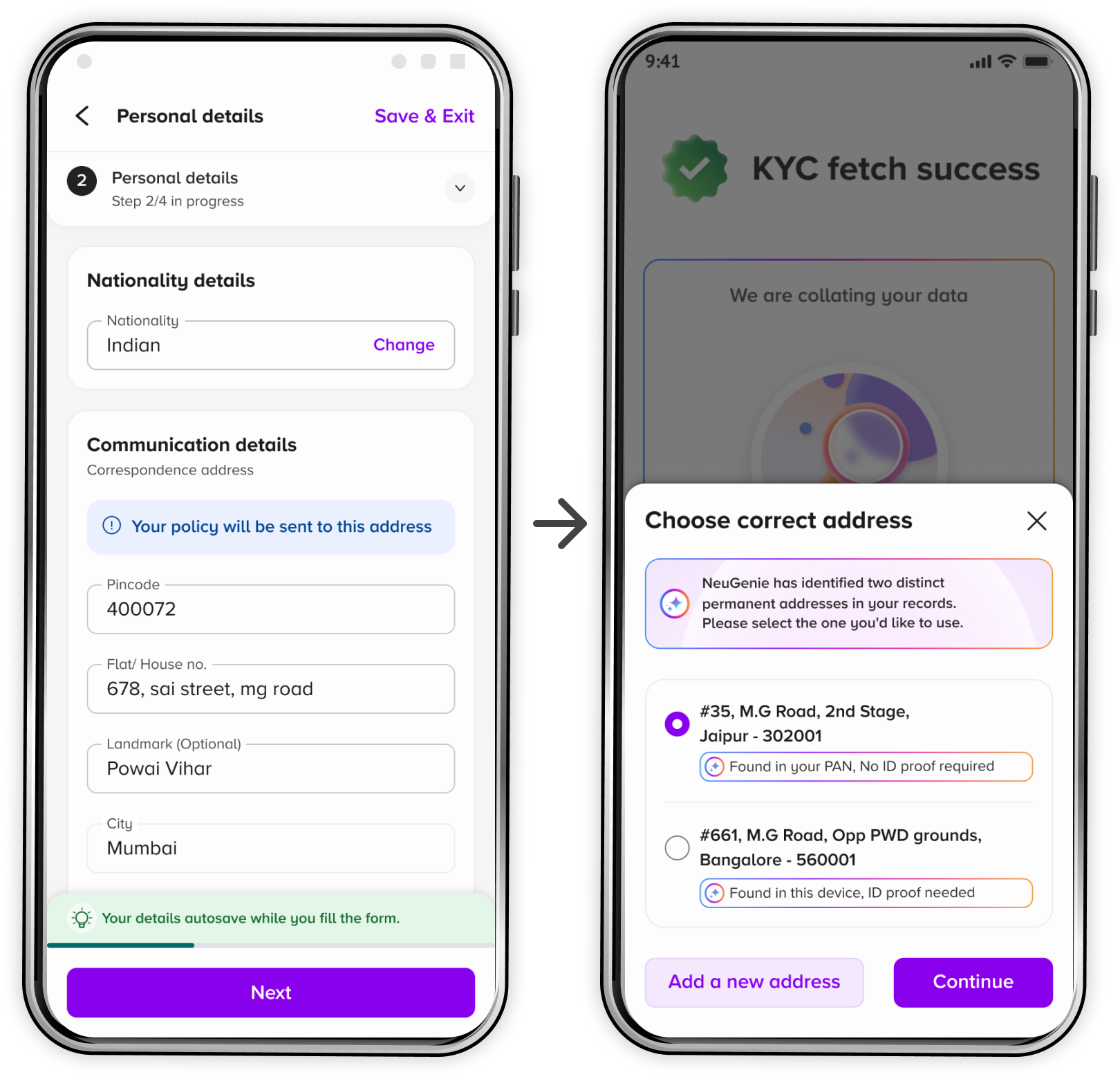
AI changed user expectations — but not through in-app chatbots.
Users increasingly rely on general-purpose AI (ChatGPT, Gemini, Perplexity) to understand options and make decisions, then return to apps only to transact.
In-app conversational assistants saw early curiosity but declining long-term engagement, especially in high-stake financial journeys.
This revealed a gap:
1
Users don’t want to talk to AI inside apps
2
They want AI to quietly remove friction inside the task
This insight reframed the problem from:
“Building a better chatbot” → Designing “autonomous intelligence” inside journeys.
PROBLEM
Insurance post-payment documentation (KYC → personal → nominee → health → upload) suffered from:

50+ fields
High mismatch between user input and documents
Frequent underwriting back-and-forth
~35–45% drop-offs at mid-stage
Heavy dependency on call centers
Long issuance SLAs (Service level agreements)
A static form could never solve this. An autonomous agent could.
This project redefines how AI can operate inside financial services:


Not as a chatbot


But as a silent, intelligent collaborator
DESIGN INTENT
Instead of adding conversational AI, I explored Agentic Experience Design:
AI that operates autonomously within the journey- Preparing data, resolving conflicts, and adapting the UI- Without requiring users to interact with it explicitly.
The focus was on:


1
Low-stake first → build trust safely
2
Silent when possible, visible when needed
3
Contextual intelligence, not global chatbot
4
Dynamic UI instead of static forms
5
Users always retain final control

Study | Sep 2025
Coming soon
AI casestudy
We also did indepth understanding of ‘Conversational UI’.
Details in this blog
AGENT SYSTEM ARCHITECTURE (HIGH LEVEL)


KYC Inputs - User-Initiated KYC (Compliance Gate)
Review layer
Agent layer
Fetches
Synthesises
Predicts
KYC rules
Conflict resolution
Confidence thresholds
Underwriting logic
Constructs screens on the fly;
suppresses irrelevant fields
OCR
Formatting corrections, mismatch detection
Policy engine
Dynamic UI builder
Verification layer

User overrides, revalidation, trust & transparency
The agent activates only after explicit user consent and KYC authentication.
WHAT I DESIGNED
Peripheral (reinforces trust + preference)
Identity verification is explicitly user-driven and compliance-bound.
Users complete KYC via: Digilocker, PAN or AADHAR with OTP verification or Manual document upload
Until KYC is completed, the agent remains inactive by design.
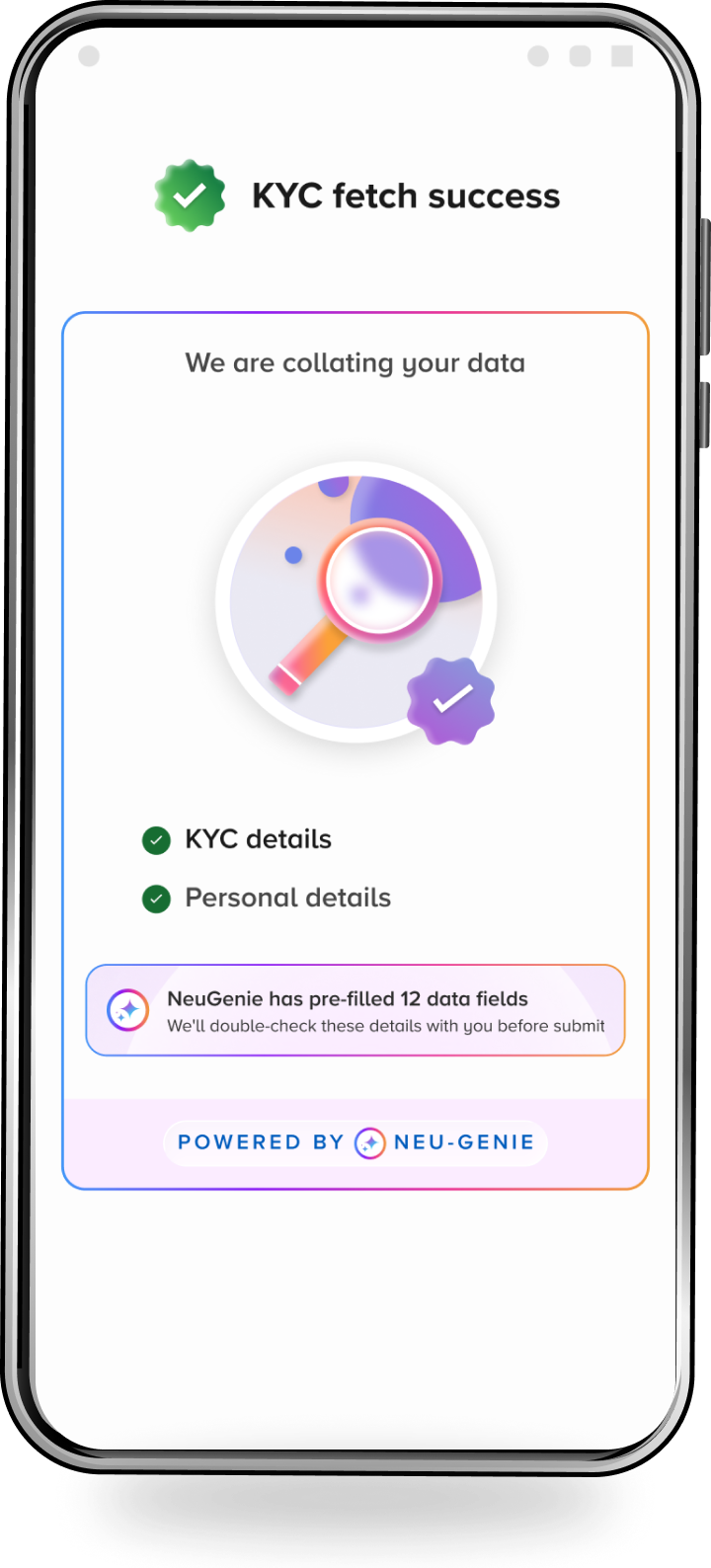
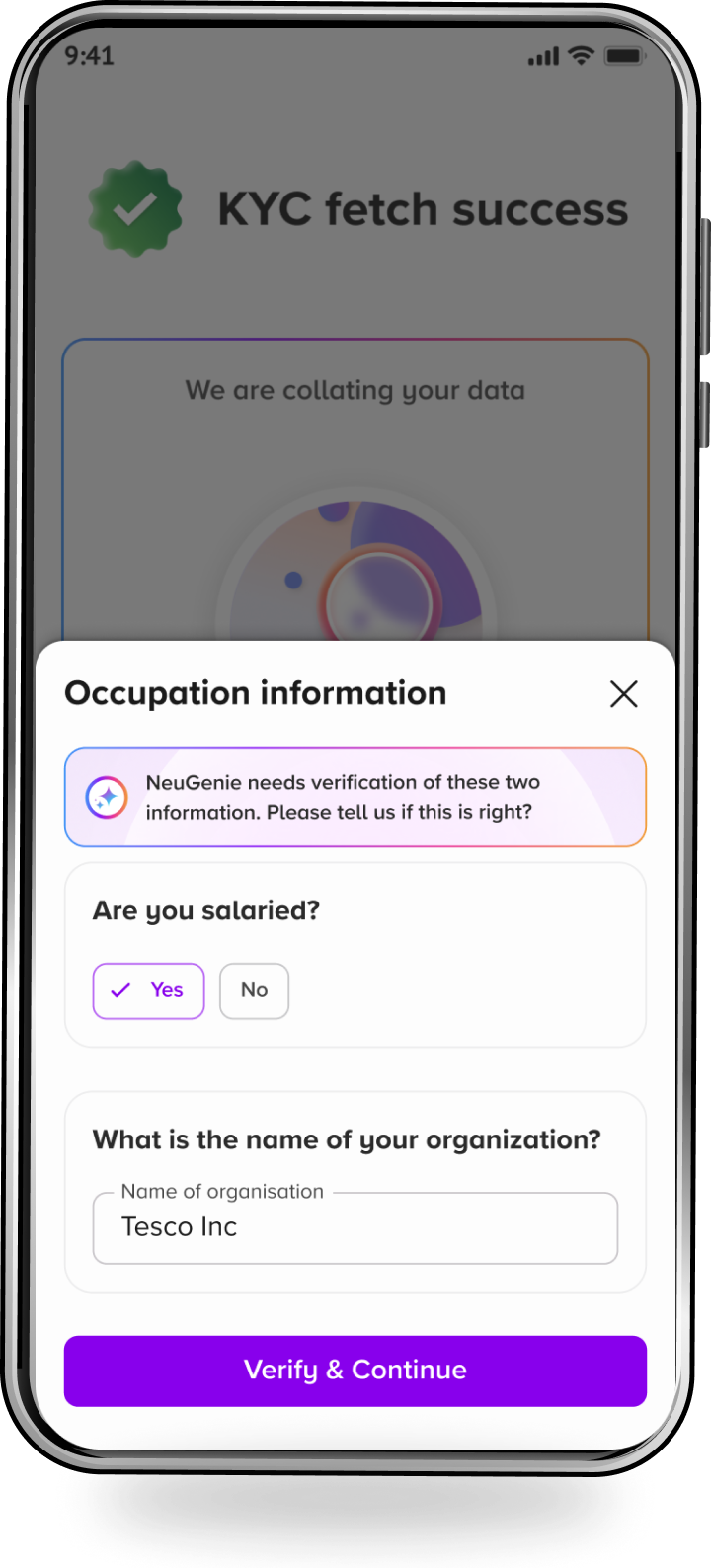
Once KYC is authenticated and consent is established, the agent:
retrieves verified identity attributes
reconciles data across sources
normalises formatting (name, address, DOB)
resolves low-confidence issues silently
flags only material mismatches for user confirmation
evaluates downstream dependencies
determines the smallest valid journey required
Outcome:
30–60% of downstream fields are resolved before the next UI step appears.
Peripheral (reinforces trust + preference)
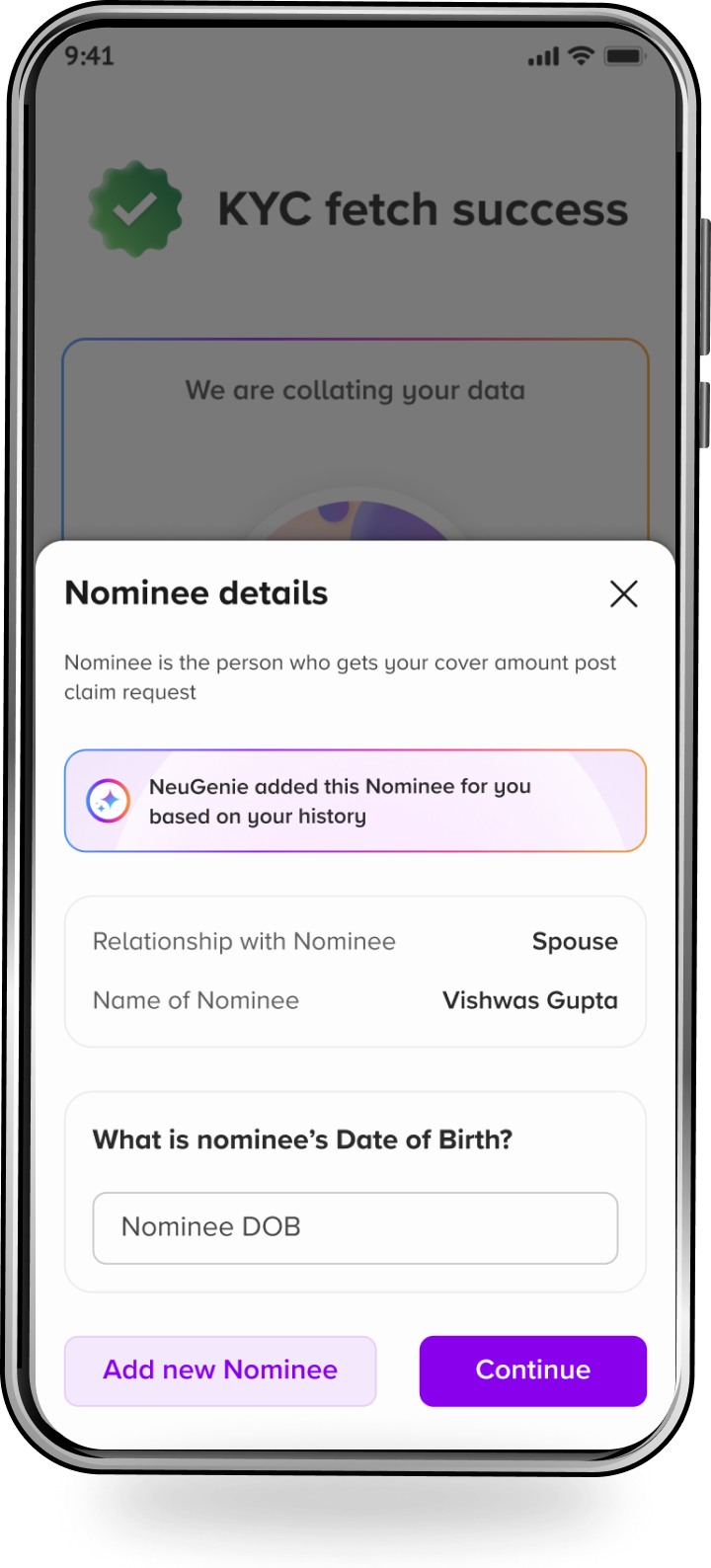
After KYC, the journey is no longer linear.
The agent builds a unique flow for each user:
Scenario A: Data Available
auto-filled personal details
auto-selected nominee
reduced health questions
minimized document requirements
Scenario B: No Data Available
DOB
Work type
Nominee relation
From these, the agent derives 20+ dependent fields.
Outcome:
Different users see different journeys — all valid, all shorter.
Peripheral (reinforces trust + preference)
The agent continuously checks for inconsistencies across: KYC data, User inputs, Document outputs
Scenario A: Silent actions (no UI)
Formatting corrections
Casing & spacing normalisation
Duplicate field resolution
Scenario B: Visible actions (UI surfaced)
Identity mismatches
Address conflicts
Contradictory declarations
User input is requested only when confidence drops below threshold or compliance requires confirmation.
Outcome:
Fewer errors, fewer underwriting rejections, fewer follow-ups.
Peripheral (reinforces trust + preference)
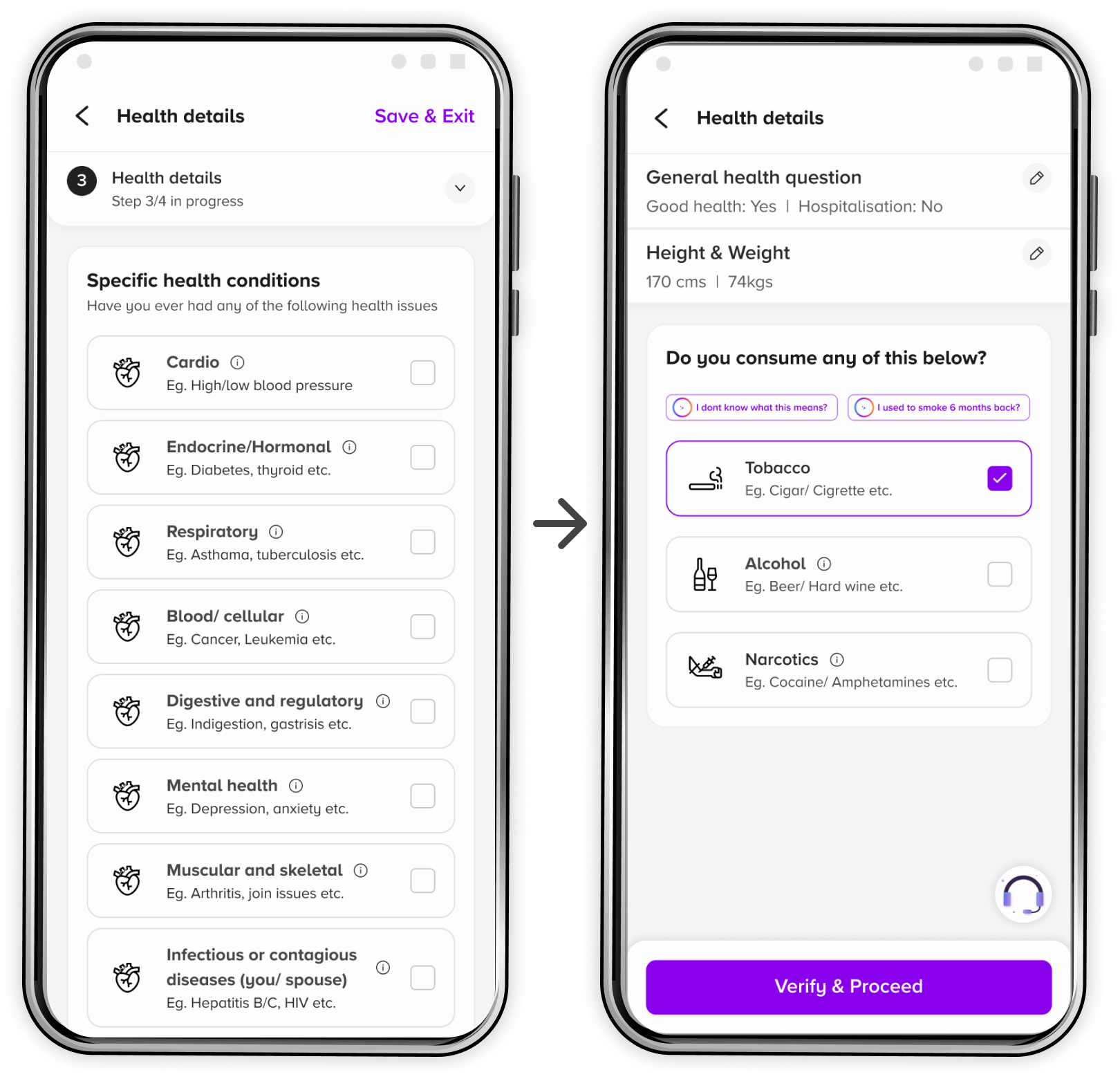
Health underwriting was redesigned from a static questionnaire into a risk-adaptive system.
Based on age, past policy metadata, and contradiction signals:
Low-risk users see 5–6 questions
Medium-risk users see 8–10 questions
Full questionnaires are shown only when justified
Irrelevant sections are suppressed automatically.
Outcome:
Significant reduction in cognitive load without compromising underwriting accuracy.
Peripheral (reinforces trust + preference)
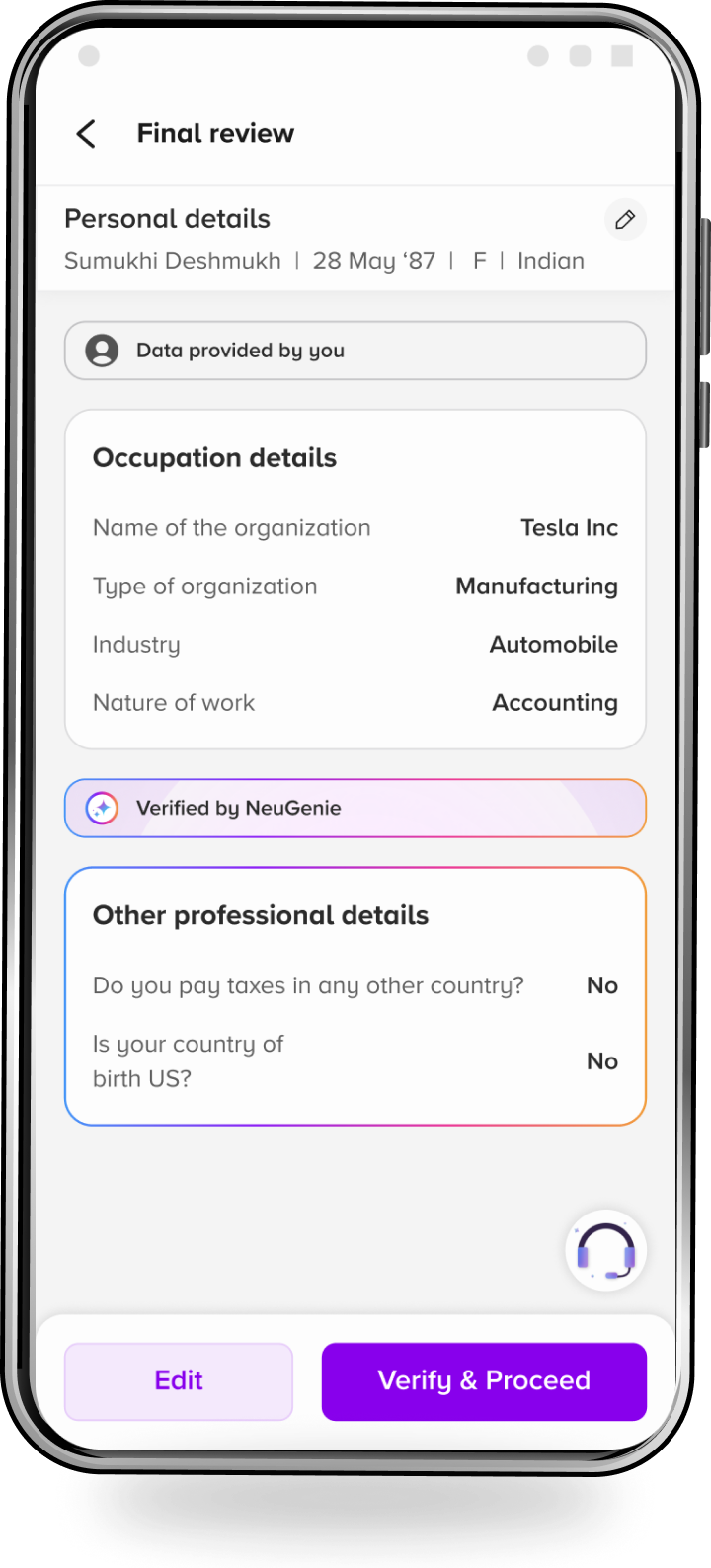
Before submission, users are shown a single consolidated review:
All auto-filled data
All agent-resolved fields
Clear distinction between verified vs user-entered information
Users can manually edit any field.
If edits impact verification or underwriting:
Dependencies are re-evaluated
Only newly required inputs are surfaced
Outcome:
High trust, full user control, and regulatory safety — without reintroducing friction.
IMPACT (DIRECTIONAL)
While this project focused on system design and feasibility, it demonstrates potential to:
40–70%
Reduced journey length
50%
Fewer fields per user
30–40%
Reduced underwriting mismatches

Lower call-centre dependency
Improve DIY completion confidence
Shorten issuance SLAs
REFLECTION / SCALE
What This Project Demonstrates
Systems thinking over UI optimisation
Designing within regulatory constraints
Agentic frameworks instead of feature-level AI
Cross-functional alignment (AI, data, product, compliance)
Reusable intelligence across financial journeys
Looking Ahead
The same agentic framework can extend to:

Loans and credit onboarding
UPI recovery and dispute flows
Investment onboarding
Insurance claims
MORE PROJECTS TO EXPLORE
Similar work and additional learning in other projects


ARVIND SETHIA - MORE PROJECT
Agentic AI for Insurance Documentation
Designing an autonomous, compliance-safe system to reduce friction in insurance issuance
AI /EMERGING
OVERVIEW
Insurance documentation is one of the highest-friction journeys in Tata Neu — long, error-prone, and heavily dependent on manual intervention.
I designed an agentic onboarding framework that activates after user-authorised KYC, autonomously prepares data, resolves inconsistencies, suppresses irrelevant inputs, and dynamically constructs the shortest valid journey for each user.
The result is a system that reduces effort without adding conversational overhead, while staying fully compliant with insurance regulations.
CONTEXT
AI changed user expectations — but not through in-app chatbots.
Users increasingly rely on general-purpose AI (ChatGPT, Gemini, Perplexity) to understand options and make decisions, then return to apps only to transact.
In-app conversational assistants saw early curiosity but declining long-term engagement, especially in high-stake financial journeys.
This revealed a gap:
1
Users don’t want to talk to AI inside apps
2
They want AI to quietly remove friction inside the task
This insight reframed the problem from:
“Building a better chatbot” → Designing “autonomous intelligence” inside journeys.
PROBLEM
Insurance post-payment documentation (KYC → personal → nominee → health → upload) suffered from:
50+ fields
High mismatch between user input and documents
Frequent underwriting back-and-forth
~35–45% drop-offs at mid-stage
Heavy dependency on call centers
Long issuance SLAs (Service level agreements)
A static form could never solve this. An autonomous agent could.
This project redefines how AI can operate inside financial services:
Not as a chatbot
But as a silent, intelligent collaborator
DESIGN INTENT
Instead of adding conversational AI, I explored Agentic Experience Design:
AI that operates autonomously within the journey- Preparing data, resolving conflicts, and adapting the UI- Without requiring users to interact with it explicitly.
The focus was on:
1
Low-stake first → build trust safely
2
Silent when possible, visible when needed
3
Contextual intelligence, not global chatbot
4
Dynamic UI instead of static forms
5
Users always retain final control
Study | Sep 2025
Coming soon
AI casestudy
We also did indepth understanding of ‘Conversational UI’.
Details in this blog
AGENT SYSTEM ARCHITECTURE (HIGH LEVEL)
KYC Inputs - User-Initiated KYC (Compliance Gate)
Review layer
Agent layer
Fetches
Synthesises
Predicts
KYC rules
Conflict resolution
Confidence thresholds
Underwriting logic
Constructs screens on the fly;
suppresses irrelevant fields
OCR
Formatting corrections, mismatch detection
Policy engine
Dynamic UI builder
Verification layer
User overrides, revalidation, trust & transparency
The agent activates only after explicit user consent and KYC authentication.
WHAT I DESIGNED
User-Initiated KYC & Agentic Data Preparation
Identity verification is explicitly user-driven and compliance-bound.
Users complete KYC via: Digilocker, PAN or AADHAR with OTP verification or Manual document upload
Until KYC is completed, the agent remains inactive by design.
Once KYC is authenticated and consent is established, the agent:
retrieves verified identity attributes
reconciles data across sources
normalises formatting (name, address, DOB)
resolves low-confidence issues silently
flags only material mismatches for user confirmation
evaluates downstream dependencies
determines the smallest valid journey required
Outcome:
30–60% of downstream fields are resolved before the next UI step appears.
Dynamic Journey Construction
After KYC, the journey is no longer linear.
The agent builds a unique flow for each user:
Scenario A: Data Available
auto-filled personal details
auto-selected nominee
reduced health questions
minimized document requirements
Scenario B: No Data Available
DOB
Work type
Nominee relation
From these, the agent derives 20+ dependent fields.
Outcome:
Different users see different journeys — all valid, all shorter.
Conflict Resolution & Error Prevention
The agent continuously checks for inconsistencies across: KYC data, User inputs, Document outputs
Scenario A: Silent actions (no UI)
Formatting corrections
Casing & spacing normalisation
Duplicate field resolution
Scenario B: Visible actions (UI surfaced)
Identity mismatches
Address conflicts
Contradictory declarations
User input is requested only when confidence drops below threshold or compliance requires confirmation.
Outcome:
Fewer errors, fewer underwriting rejections, fewer follow-ups.
Agent-Driven Health Underwriting Simplification
Health underwriting was redesigned from a static questionnaire into a risk-adaptive system.
Based on age, past policy metadata, and contradiction signals:
Low-risk users see 5–6 questions
Medium-risk users see 8–10 questions
Full questionnaires are shown only when justified
Irrelevant sections are suppressed automatically.
Outcome:
Significant reduction in cognitive load without compromising underwriting accuracy.
Final Review & User Control
Before submission, users are shown a single consolidated review:
All auto-filled data
All agent-resolved fields
Clear distinction between verified vs user-entered information
Users can manually edit any field.
If edits impact verification or underwriting:
Dependencies are re-evaluated
Only newly required inputs are surfaced
Outcome:
High trust, full user control, and regulatory safety — without reintroducing friction.
IMPACT (DIRECTIONAL)
While this project focused on system design and feasibility, it demonstrates potential to:
40–70%
Reduced journey length
50%
Fewer fields per user
30–40%
Reduced underwriting mismatches
Lower call-centre dependency
Improve DIY completion confidence
Shorten issuance SLAs
REFLECTION / SCALE
What This Project Demonstrates
Systems thinking over UI optimisation
Designing within regulatory constraints
Agentic frameworks instead of feature-level AI
Cross-functional alignment (AI, data, product, compliance)
Reusable intelligence across financial journeys
Looking Ahead
The same agentic framework can extend to:
Loans and credit onboarding
UPI recovery and dispute flows
Investment onboarding
Insurance claims
MORE PROJECTS TO EXPLORE
Similar work and additional learning in other projects


ARVIND SETHIA - MORE PROJECT
Agentic AI for Insurance Documentation
Designing an autonomous, compliance-safe system to reduce friction in insurance issuance
AI /EMERGING
OVERVIEW
Insurance documentation is one of the highest-friction journeys in Tata Neu — long, error-prone, and heavily dependent on manual intervention.
I designed an agentic onboarding framework that activates after user-authorised KYC, autonomously prepares data, resolves inconsistencies, suppresses irrelevant inputs, and dynamically constructs the shortest valid journey for each user.
The result is a system that reduces effort without adding conversational overhead, while staying fully compliant with insurance regulations.
CONTEXT
AI adoption changed how users seek information — but not how they complete transactions.
Users increasingly rely on general-purpose AI (ChatGPT, Gemini, Perplexity) to understand options and make decisions, then return to apps only to transact.
In-app conversational assistants saw early curiosity but declining long-term engagement, especially in high-stake financial journeys.
This revealed a gap:
1
Users don’t want to talk to AI inside apps
2
They want AI to quietly remove friction inside the task
This insight reframed the problem from:
“Building a better chatbot” → Designing “autonomous intelligence” inside journeys.
PROBLEM
Insurance post-payment documentation (KYC → personal → nominee → health → upload) suffered from:
50+ fields
High mismatch between user input and documents
Frequent underwriting back-and-forth
~35–45% drop-offs at mid-stage
Heavy dependency on call centers
Long issuance SLAs (Service level agreements)
Static forms and conversational UI patterns were not solving these systemic issues.
This project redefines how AI can operate inside financial services:

Not as a chatbot
But as a silent, intelligent collaborator
DESIGN INTENT
Instead of adding conversational AI, I explored Agentic Experience Design:
AI that operates autonomously within the journey- Preparing data, resolving conflicts, and adapting the UI- Without requiring users to interact with it explicitly.
The focus was on:
1
Low-stake first → build trust safely
2
Silent when possible, visible when needed
3
Contextual intelligence, not global chatbot
4
Dynamic UI instead of static forms
5
Users always retain final control
Study | Sep 2025
Coming soon
AI casestudy
We also did indepth understanding of ‘Conversational UI’.
Details in this blog
AGENT SYSTEM ARCHITECTURE (HIGH LEVEL)
The solution is built as a layered system
KYC Inputs - User-Initiated KYC (Compliance Gate)
Review layer
Agent layer
Fetches
Synthesises
Predicts
KYC rules
Conflict resolution
Confidence thresholds
Underwriting logic
Constructs screens on the fly;
suppresses irrelevant fields
Convert text from scanned document,
Formatting corrections, mismatch detection
Policy engine
Dynamic UI builder
Verification layer
User overrides, revalidation, trust & transparency
The agent activates only after explicit user consent and KYC authentication.
WHAT I DESIGNED
User-Initiated KYC & Agentic Data Preparation
Identity verification is explicitly user-driven and compliance-bound.
Users complete KYC via: Digilocker, PAN or AADHAR with OTP verification or Manual document upload
Until KYC is completed, the agent remains inactive by design.
Once KYC is authenticated and consent is established, the agent:
retrieves verified identity attributes
reconciles data across sources
normalises formatting (name, address, DOB)
resolves low-confidence issues silently
flags only material mismatches for user confirmation
evaluates downstream dependencies
determines the smallest valid journey required
Outcome:
30–60% of downstream fields are resolved before the next UI step appears.
Dynamic Journey Construction
After KYC, the journey is no longer linear.
The agent builds a unique flow for each user:
Scenario A: Data Available
auto-filled personal details
auto-selected nominee
reduced health questions
minimized document requirements
Scenario B: No Data Available
DOB
Work type
Nominee relation
From these, the agent derives 20+ dependent fields.
Outcome:
Different users see different journeys — all valid, all shorter.
Conflict Resolution & Error Prevention
The agent continuously checks for inconsistencies across: KYC data, User inputs, Document outputs
Scenario A: Silent actions (no UI)
Formatting corrections
Casing & spacing normalisation
Duplicate field resolution
Scenario B: Visible actions (UI surfaced)
Identity mismatches
Address conflicts
Contradictory declarations
User input is requested only when confidence drops below threshold or compliance requires confirmation.
Outcome:
Fewer errors, fewer underwriting rejections, fewer follow-ups.
Agent-Driven Health Underwriting Simplification
Health underwriting was redesigned from a static questionnaire into a risk-adaptive system.
Based on age, past policy metadata, and contradiction signals:
Low-risk users see 5–6 questions
Medium-risk users see 8–10 questions
Full questionnaires are shown only when justified
Irrelevant sections are suppressed automatically.
Outcome:
Significant reduction in cognitive load without compromising underwriting accuracy.
Final Review & User Control
Before submission, users are shown a single consolidated review:
All auto-filled data
All agent-resolved fields
Clear distinction between verified vs user-entered information
Users can manually edit any field.
If edits impact verification or underwriting:
Dependencies are re-evaluated
Only newly required inputs are surfaced
Outcome:
High trust, full user control, and regulatory safety — without reintroducing friction.
IMPACT (DIRECTIONAL)
While this project focused on system design and feasibility, it demonstrates potential to:
40–70%
Reduced journey length
50%
Fewer fields per user
30–40%
Reduced underwriting mismatches
Lower call-centre dependency
Improve DIY completion confidence
Shorten issuance SLAs
REFLECTION / SCALE
What This Project Demonstrates
Systems thinking over UI optimisation
Designing within regulatory constraints
Agentic frameworks instead of feature-level AI
Cross-functional alignment (AI, data, product, compliance)
Reusable intelligence across financial journeys
Looking Ahead
The same agentic framework can extend to:
Loans and credit onboarding
UPI recovery and dispute flows
Investment onboarding
Insurance claims
MORE PROJECTS TO EXPLORE
Similar work and additional learning in other projects